


Your roadmap into cybersecurity
A clear 12-month path: what to learn, where to practise, and when to pick your first certification without scattering your effort or overspending.
Do not start with a certification or with hacking tools. Start by understanding the systems you want to protect: computers, networks, Linux, Windows and identity. Then learn security, practise in a legal lab, and take one certification that serves the job you want.
Find your starting point in a minute
Complete beginner
Start with networking and Linux for free. Practise for 3 months, then choose CCST on a tight budget, or Security+ once you have a solid base.
You have a technical base
Review the Security+ objectives, close the gaps and do labs before you buy the exam. After the certification, move to one hands-on specialty.
Cybersecurity student
Do not collect similar entry certifications. If you understand networks and systems, choose Security+ or a hands-on certification tied to your track.
A simple buying rule: do not pay for an exam until you know the target job, what its job ads require, the renewal policy and the retake cost.
Months 0 to 3: build the technical base
Systems
Files, processes, permissions and virtualisation, Linux commands, Windows logs, Active Directory and PowerShell.
Networking
TCP/IP, ports, DNS, DHCP, routing, NAT, HTTP, TLS and VPN, then reading packets with Wireshark.
Light automation
Python, Bash, SQL and Git basics. The goal is to read code and write small tools, not to become a professional developer.
Free resources
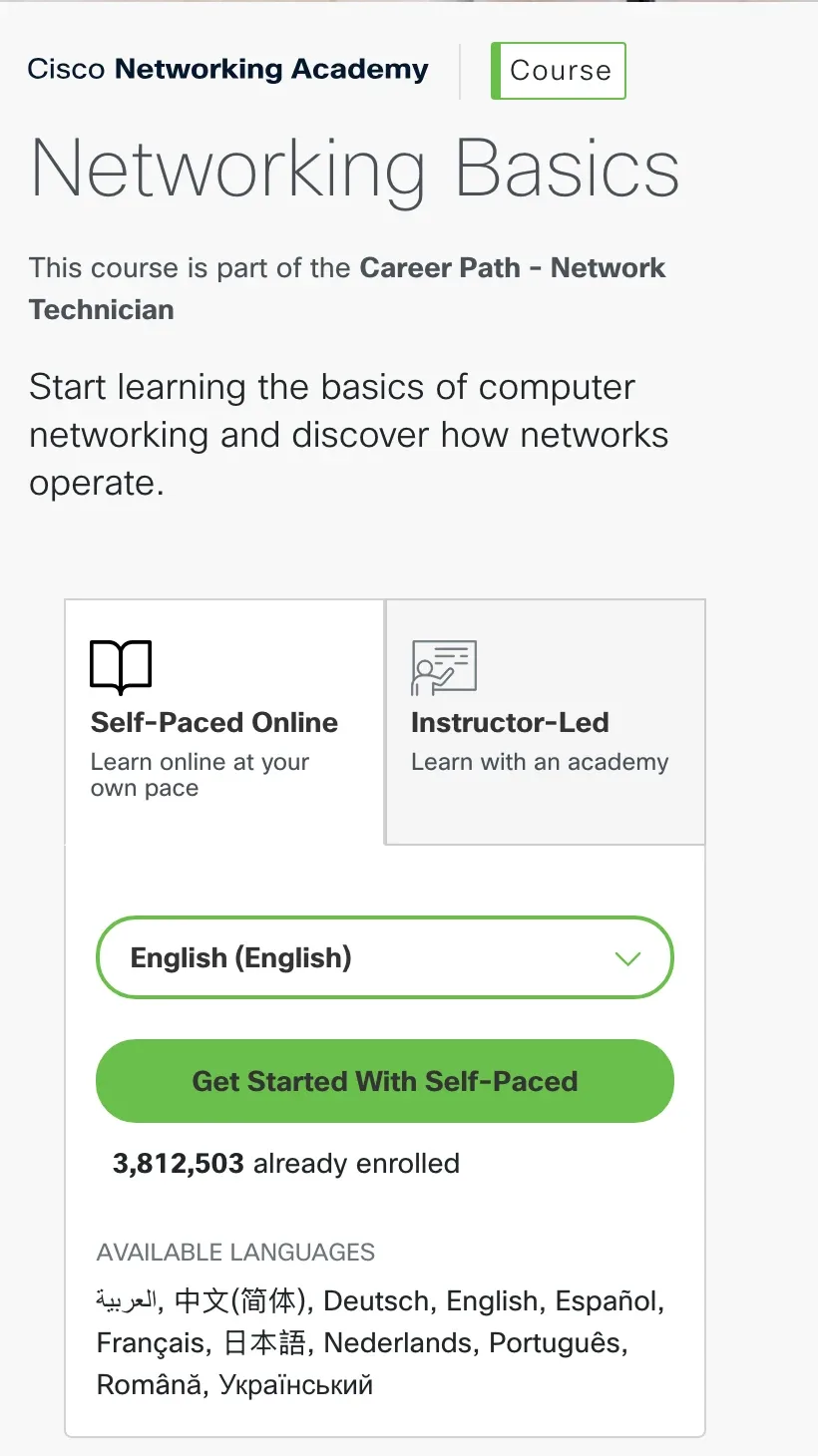
The course is free and takes about 22 hours. Pick your language from the menu, then click "Get Started With Self-Paced".
Build an isolated lab and draw its network, explain DNS, TCP, HTTP and TLS on one page, then analyse a PCAP file and write your own list of Linux commands.
You can explain the path of a connection from your computer to a website, read basic packets, and use Linux without copying every command from a walkthrough.
Months 3 to 6: learn security and practise
Learn confidentiality, integrity and availability, least privilege, defence in depth, zero trust, risk and controls, identity, cryptography, logging, monitoring and incident response.
- General path: TryHackMe Cyber Security 101 or Cisco's Junior Cybersecurity Analyst path, which takes about 120 hours and prepares you for CCST Cybersecurity.
- Web security: read the OWASP Top 10 2025 and solve the Apprentice level in PortSwigger Academy.
- Defence: use the free Basic plan on LetsDefend to practise handling alerts, then analyse one incident and write its timeline. The platform is moving to Hack The Box, and its SOC alerts move there by the end of 2026.
- Challenges: solve problems from 4 categories in CyLab Security Academy (the new name of picoCTF, and free).
Output of this phase: 3 short reports: a legal web vulnerability report, a network or PCAP report, and a SOC alert or digital forensics report.
Choose only one entry certification
| When it suits you | Certification | List price |
|---|---|---|
| Tight budget and a clear start | Cisco CCST Cybersecurity | US$125 |
| A general, vendor-neutral certification | ISC2 CC | US$199 + US$50 a year |
| Good networking base and stronger visibility with employers | CompTIA Security+ | Varies by country, check the CompTIA store |
| Microsoft security and identity | Microsoft SC-900 | US$99, varies by region |
| A structured learning programme | Google Cybersecurity Certificate | Monthly Coursera subscription, price varies by country, financial aid available |
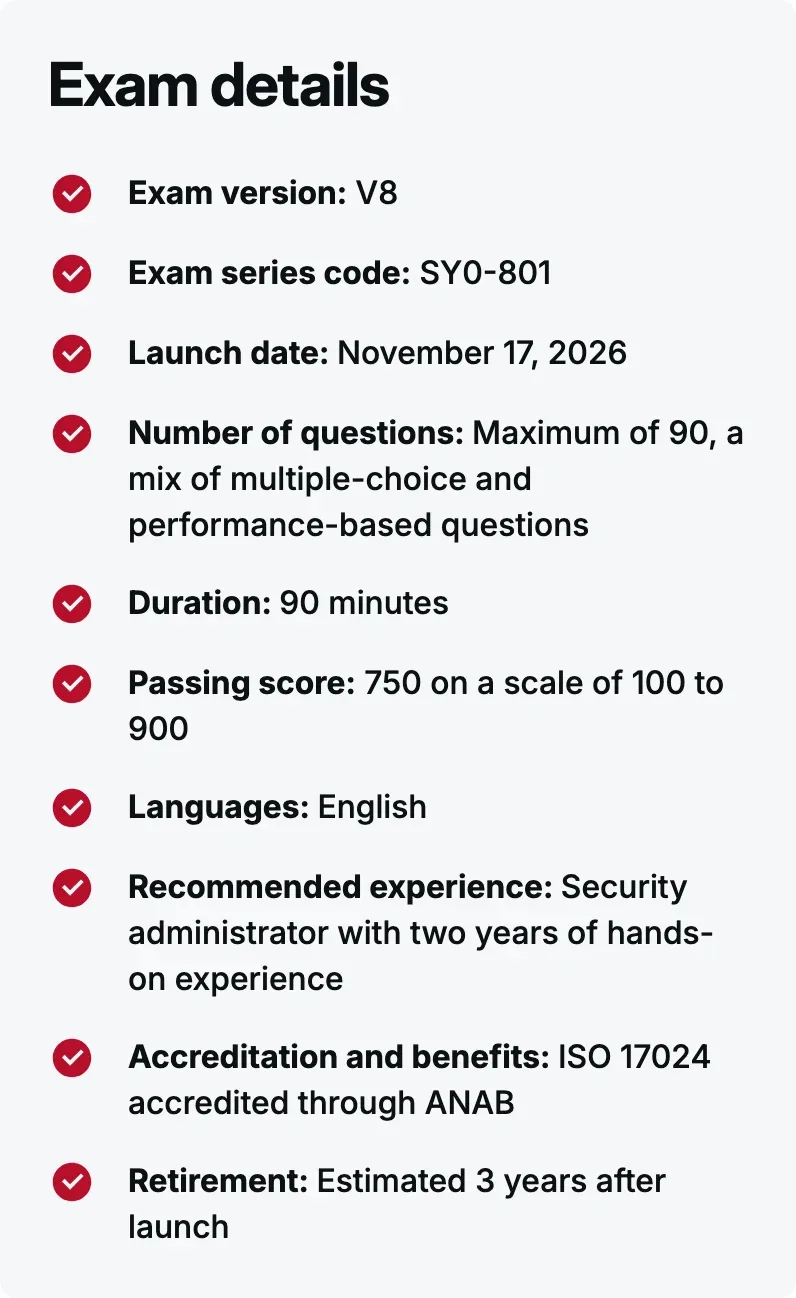
Before you buy: Security+ V8, exam code SY0-801, launched on 17 November 2026 and is currently available in English only. The previous exam, SY0-701, retires in English on 11 June 2027, so prepare for V8. ISC2 has closed new sign-ups to its free One Million Certified in Cybersecurity programme, so budget for the CC exam.
Months 6 to 9: pick one specialty
Try the tracks first, then pick one based on the kind of work you enjoy and the jobs available around you.
Defence and SOC
Analyse email, logs, PCAP, Windows Events and SIEM data, and complete two full investigations.
BTL1: £399, including 4 months of training and the exam. Add SC-200 for Sentinel and Defender environments.
Penetration testing
Learn reconnaissance, web security, privilege escalation, Active Directory and report writing.
eJPT: US$299 with 3 months of training. After that, your subscription upgrades automatically to the Premium plan for US$350 unless you cancel the renewal. Then PNPT or CPTS. Leave OSCP until you can finish intermediate labs on your own.
Application security
Learn programming, HTTP, OWASP, code review and threat modelling.
Work through PortSwigger up to the Practitioner level, then consider BSCP.
Cloud security
Pick one platform and learn to administer it, then practise IAM, logging, networking, keys and secrets.
Microsoft: SC-500. AZ-500 retired on 31 August 2026, so do not rely on its prep material. AWS and GCP need real operational experience.
Governance, risk and compliance (GRC)
Learn NIST CSF 2.0, CIS Controls and ISO 27001. Build a risk register, a policy, an evidence request and a tabletop exercise. Leave CISA, CISM, CRISC and CISSP until you meet their experience requirements.
Months 9 to 12: build a portfolio and start applying
What to publish
One full case study, 2 to 4 varied reports, a small analysis tool, an architecture diagram or threat model, and a page on ethics and your lab's limits.
How to raise the quality
Explain the problem, method, evidence, limits and remediation. Make the steps reproducible, and write a summary a non-technical reader can follow.
Before publishing: remove passwords, personal data, client names and real addresses. Do not publish flags from live challenges or exam answers.
Sensible first jobs
A weekly schedule you can sustain
Only have 5 hours? Prioritise the lab and the project, then learn the theory you need to solve the problem.
Set a budget that does not buy you distraction
Use Cisco, Microsoft, PortSwigger, OWASP, CyLab Security Academy and OverTheWire, and build a portfolio.
Take CCST, CC or SC-900, or pay for a few months on one platform.
Take Security+ or an entry hands-on certification such as BTL1 or eJPT, not all of them.
One entry certification, one hands-on specialty certification, and one focused lab subscription.
Do not pay for OSCP or SANS before you have proven you are ready. Look first for funding from your university or employer.
Avoid these mistakes
Tools before understanding
Starting with Kali Linux and attack tools before you understand networks and systems.
Collecting certifications
Buying 4 similar entry certifications and memorising questions without being able to apply them.
Copying solutions
Copying a full lab walkthrough and counting it as experience, without an independent attempt or a report.
Putting off applying
Waiting to be perfect before applying for a suitable internship or entry job.
The legal scope does not change: test only systems you own or have clear permission to test. Never test a public target just to learn.
Are you ready to specialise?
Sources: the official pages of Cisco, CompTIA, ISC2, Microsoft, INE, Centri, the Linux Foundation, OWASP and PortSwigger. Checked November 2026.
Want your team to use this at work?
I'm Abdulaziz Alshamsi, a certified AI trainer and consultant in Abu Dhabi. I train government and company teams to use AI in their daily work. Message me to discuss a session for your team.