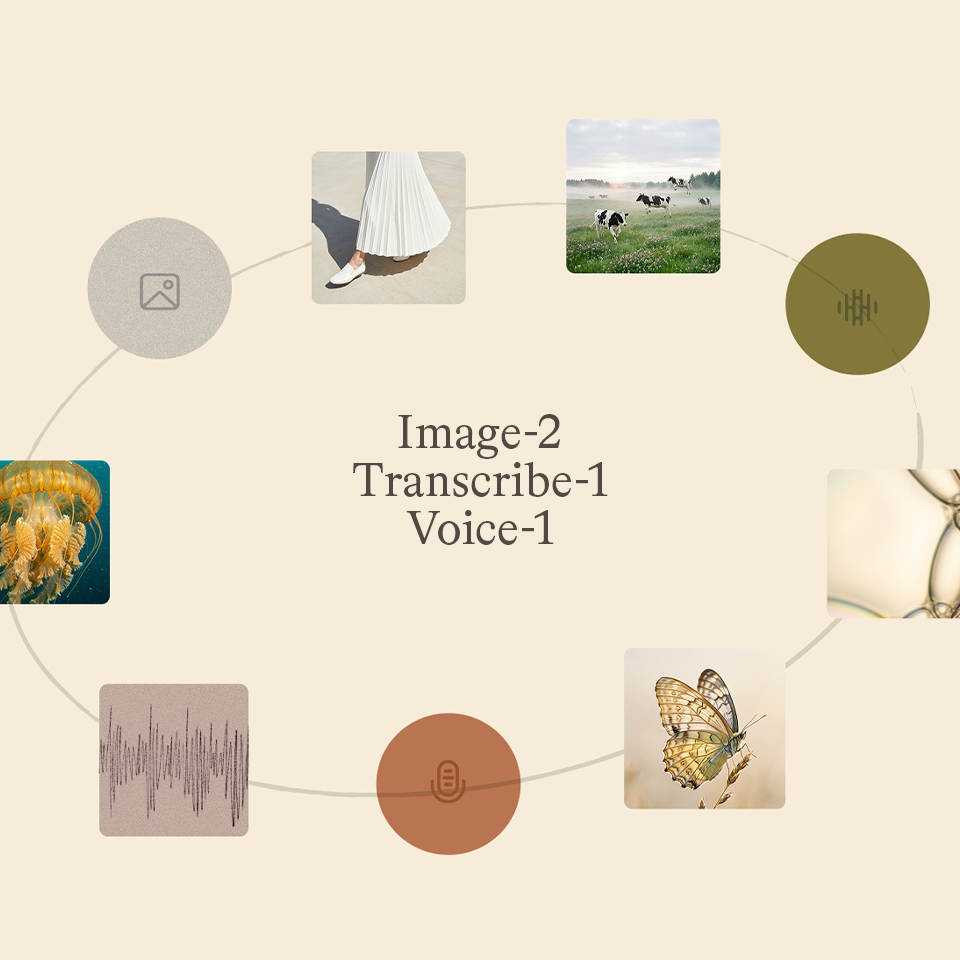
Microsoft just made its boldest move yet in the AI race. On April 2, 2026, the company announced three new foundational AI models: MAI-Transcribe-1 for speech recognition, MAI-Voice-1 for speech generation, and MAI-Image-2 for image creation. These are not wrapper products built on partner technology. They are Microsoft's own models, trained in-house, and they are designed to compete directly with OpenAI, Google, and every other frontier lab.
Why This Matters for the AI Industry
For years, Microsoft's AI strategy centered on its partnership with OpenAI. That relationship brought us GPT integrations across Azure, Copilot, and nearly every Microsoft product. But the terms of that partnership evolved, and Microsoft gained the freedom to build its own frontier models while retaining license rights to OpenAI's technology through 2032.
These MAI models represent the first concrete evidence that Microsoft is exercising that freedom at scale. The company is no longer just a distribution channel for OpenAI. It is now a direct competitor in foundational model development.
For enterprises and developers, this shift creates optionality. You can now build on Microsoft's native models within Azure Foundry without depending on external partnerships. For the broader industry, it signals that the big platform players are all racing to own their AI stack from the ground up.
Breaking Down the Three Models
MAI-Transcribe-1 handles speech-to-text across 25 languages. Microsoft claims it achieves the lowest average Word Error Rate on the FLEURS benchmark, beating OpenAI's Whisper-large-v3 on all 25 languages and Google's Gemini 3.1 Flash on 22 of 25. Batch transcription runs 2.5x faster than Azure's previous Fast offering. Pricing starts at $0.36 per hour, which is competitive with existing solutions.
MAI-Voice-1 generates natural-sounding speech from text. The standout feature is speed: it produces 60 seconds of expressive audio in under one second on a single GPU. The model also supports custom voice creation from just a 10-second audio sample. At $22 per million characters, it positions itself as both capable and cost-effective for enterprise deployments.
MAI-Image-2 generates images up to 1024x1024 pixels and currently ranks in the top three on the Arena.ai leaderboard. Microsoft highlights its strengths in photorealistic generation and accurate in-image text rendering, which has historically been a weakness for many image models. Pricing sits at $5 per million text tokens for input and $33 per million image tokens for output.
The Strategic Implications
This release is about more than benchmarks. It reflects a fundamental shift in how Microsoft approaches AI infrastructure.
First, vertical integration is accelerating. Microsoft now controls models, inference infrastructure, and distribution through Azure. This mirrors what Google has built with Gemini and what Meta is doing with Llama. The companies with the deepest stacks will have the most leverage in enterprise deals.
Second, pricing pressure is coming. Microsoft explicitly marketed these models as faster and cheaper than alternatives. When a $3 trillion company enters a market with competitive pricing, margins compress industry-wide. Expect OpenAI and Google to respond.
Third, multimodal capabilities are table stakes now. Speech, voice, and image generation are no longer specialty features. They are foundational infrastructure that every serious AI platform must offer. Microsoft's simultaneous release of all three models signals that enterprises should expect integrated multimodal solutions as the baseline.
What This Means for the Gulf Region
For those of us building AI solutions in the UAE and broader Middle East, this development has practical implications.
Arabic language support matters. MAI-Transcribe-1 covers 25 languages with enterprise-grade accuracy across accents. If Arabic is among those supported languages, this could become the go-to solution for regional enterprises that need reliable transcription in government, healthcare, and customer service applications.
Azure's regional presence is also relevant. Microsoft has been expanding its data center footprint in the Gulf. With native models now available through Azure Foundry, organizations with data residency requirements can access cutting-edge AI capabilities without routing data through distant regions.
The custom voice feature in MAI-Voice-1 opens interesting possibilities for Arabic content creation, accessibility tools, and localized customer experiences. Creating natural-sounding Arabic speech from text has historically been challenging, and a model that handles this well could unlock significant value.
Looking Ahead
Microsoft's MAI models represent a new chapter in the AI platform wars. The company is no longer content to be a distribution partner. It wants to compete on model quality, speed, and price.
For developers and enterprises, the immediate action is to evaluate these models against your current stack. The benchmarks are impressive, but real-world performance in your specific use cases is what matters. Microsoft Foundry provides access to all three models in public preview, along with a new MAI Playground for experimentation.
The broader trend is clear: the era of AI platform independence has begun. Every major cloud provider is building or acquiring its own foundational models. This competition will drive innovation and push prices down, but it will also require careful vendor strategy. The models you choose today will shape your AI architecture for years to come.