Microsoft has officially released Agent 365 to general availability as of May 1, 2026. This marks a significant milestone for enterprises struggling to maintain visibility and control over the explosion of AI agents operating across their infrastructure. The timing is notable: just weeks ago, research showed that 88% of organizations have experienced AI agent security incidents, while only 21% of executives have complete visibility into agent permissions and data access.
The Shadow AI Problem Gets a Solution
The core value proposition of Agent 365 is straightforward: give enterprises a single control plane to discover, govern, and secure AI agents regardless of where they run. This addresses a problem that has been growing more urgent every quarter. Autonomous AI agents now execute multi-step workflows, access databases, call APIs, and even spawn other agents. Most organizations have deployed them faster than their security teams can track.
Agent 365 tackles this with what Microsoft calls three core pillars: observe, govern, and secure.
The observe pillar provides real-time visibility through a central dashboard showing total registered agents, active users, growth trends, and emerging risk signals. The registry acts as a system of record for all agents with enriched metadata covering ownership, permissions, data access, security details, and usage patterns. A map view visualizes agent relationships and dependencies across platforms.
The most interesting capability here is shadow AI detection. Agent 365 can now identify local AI agents running on Windows devices outside IT visibility. At launch, this covers OpenClaw, with GitHub Copilot CLI and Claude Code support coming soon. For organizations that have struggled to even inventory their agent deployments, this is a critical first step.
Governance at Enterprise Scale
The govern pillar is where Agent 365 starts to differentiate from point solutions. Admins can manage the full agent lifecycle from the registry: install, publish, block, delete, or reassign ownership. Distribution controls allow precise rollout to specific users, groups, or the entire organization.
A centralized admin approval flow lets security teams review agent capabilities, data access, permissions, and security posture before deployment. This is the kind of workflow that prevents shadow AI from proliferating in the first place. Agent management rules can automate common governance tasks, including auto-deployment of approved Microsoft agents and auto-reassignment when agent owners leave the organization.
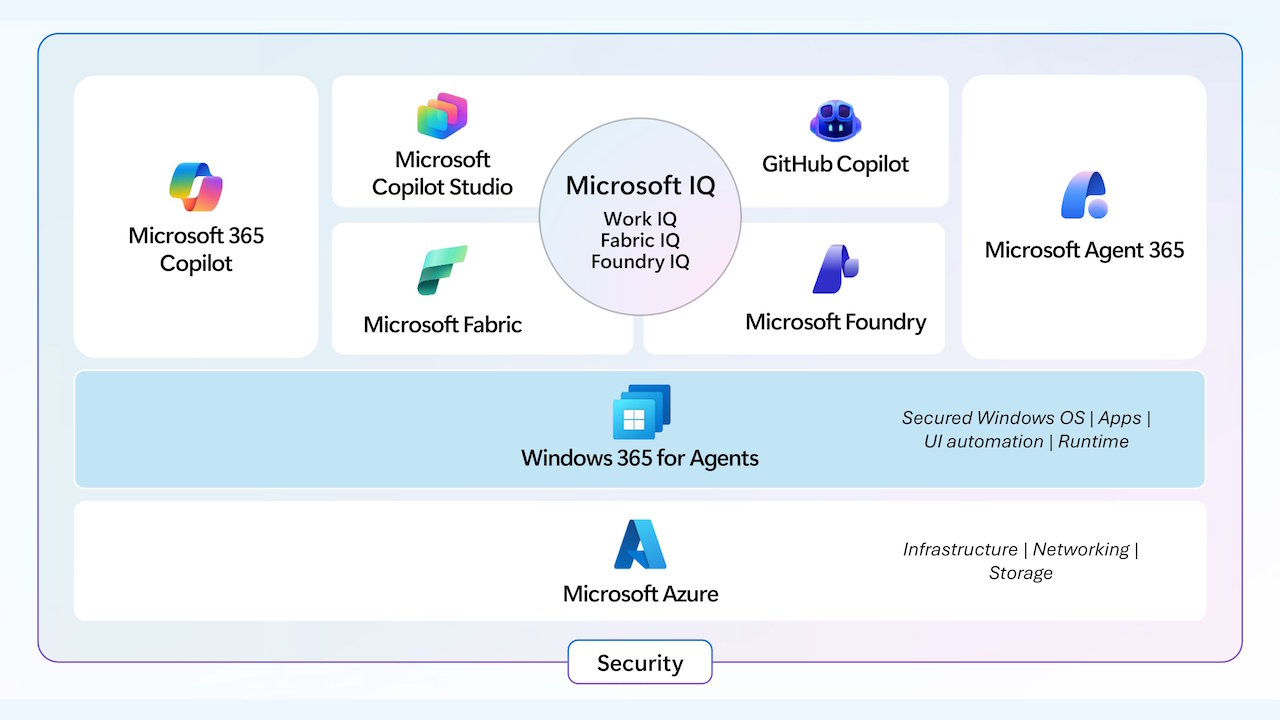
What stands out is the integration with existing Microsoft infrastructure. Agent 365 connects to Entra ID Governance for identity management, Purview for data lifecycle controls, and the Microsoft 365 compliance stack for eDiscovery and communication compliance. Policy templates group policies from these services into reusable bundles. For enterprises already invested in the Microsoft ecosystem, this means AI agent governance extends their existing controls rather than requiring a parallel system.
The tools management capability controls which MCP (Model Context Protocol) servers and resources agents can access organization-wide. As MCP becomes the standard for agent-tool interaction, this kind of centralized control becomes essential.
Security Integration Across the Stack
The secure pillar integrates with Microsoft Defender and Intune to provide comprehensive protection. Conditional access policies apply Zero Trust principles to agent interactions, with dynamic evaluation of agent and user identity compromise risk. This is generally available for delegated access agents, with own-access agent support in public preview.
Network-level security through SASE (Secure Access Service Edge) provides prompt injection protection, threat intelligence filtering, and URL filtering for agent traffic. Runtime threat detection can block prompt attacks and tool misuse as they happen. These are the kinds of attacks that have plagued production AI deployments, and having them addressed at the platform level reduces the burden on individual development teams.
Agent Security Posture Management continuously assesses for over-privileged agents, misconfigurations, and vulnerabilities with prioritized recommendations. Data Loss Prevention extends to agent interactions, controlling grounding data access and preventing exfiltration.
Multicloud Reality
One practical consideration: most enterprises do not run exclusively on Azure. Agent 365 addresses this with registry sync in public preview for AWS Bedrock and Google Cloud connections. IT teams can discover, inventory, and perform basic lifecycle governance across these platforms. This hybrid approach acknowledges that AI agent deployments are rarely contained to a single cloud provider.
Pricing and Availability
Agent 365 is available standalone at $15 per user per month, or as part of the new Microsoft 365 E7 tier at $99 per user per month. E7 represents Microsoft's first new enterprise license tier since E5 launched in 2015. For organizations already on E5, the upgrade path is clear. For those evaluating the standalone option, the value depends heavily on the scope of agent deployments and existing governance tooling.
What This Means for Practitioners
For those of us deploying AI agents in production, Agent 365 represents both an opportunity and a shift in expectations. The opportunity is obvious: centralized governance reduces the operational burden on individual teams and provides organizational visibility that was previously impossible without custom tooling.
The shift in expectations is more subtle. As platforms like Agent 365 become standard, enterprises will increasingly require governance controls before approving new agent deployments. Development teams that bake in compliance from the start, using standard protocols like MCP, maintaining clear permission models, and logging activity appropriately, will find deployment smoother. Those that treat governance as an afterthought will face friction.
In the UAE and broader Middle East, where organizations are rapidly adopting enterprise AI while navigating evolving regulatory frameworks, having a mature governance platform available from a major vendor simplifies the path forward. The integration with existing Microsoft compliance infrastructure means that AI agent governance can align with existing data residency and sovereignty requirements.
The question is no longer whether enterprises will govern their AI agents, but how quickly governance becomes table stakes for production deployment.
Sources: