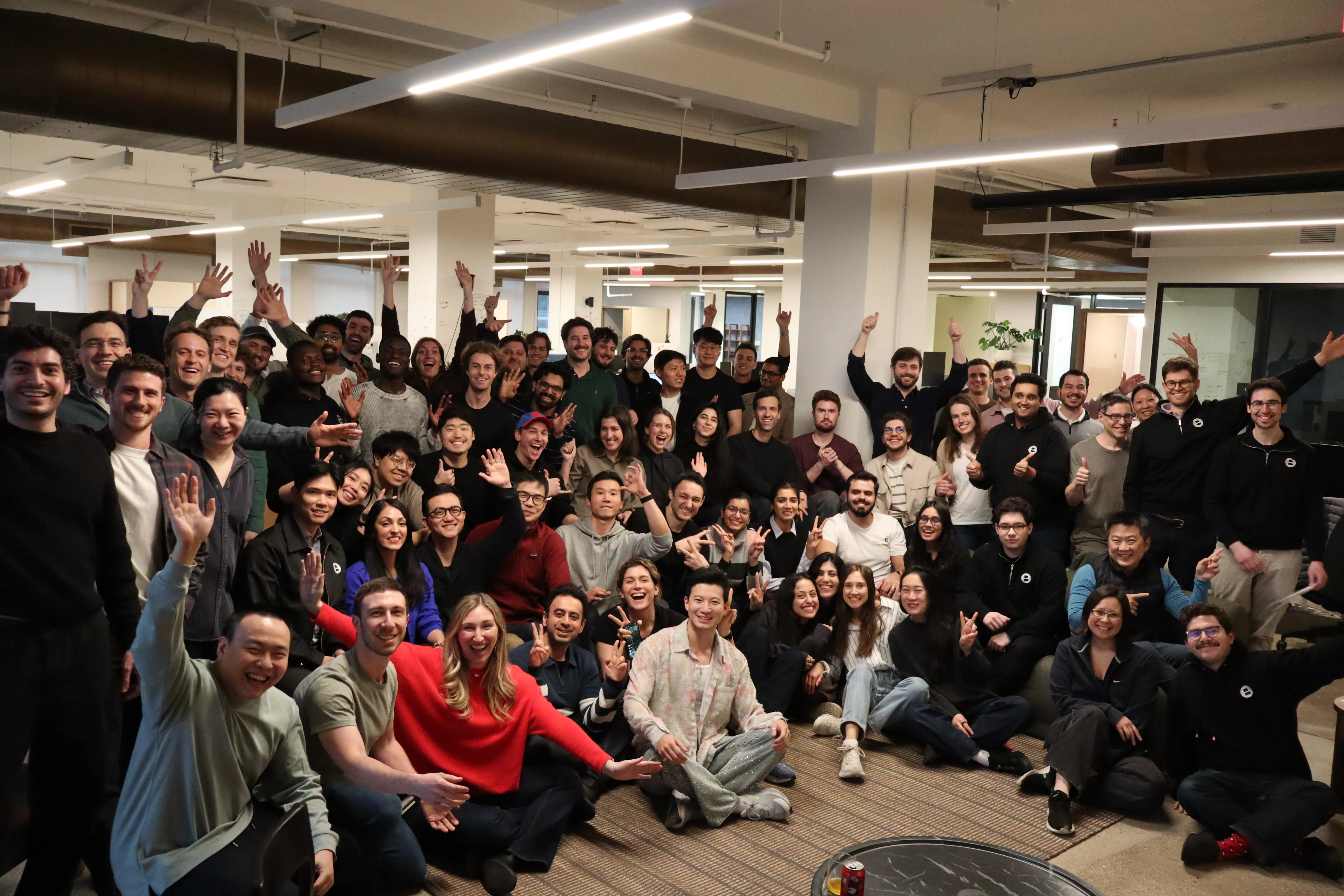
Basis, an AI startup building autonomous agents for accounting firms, just raised $100 million at a $1.15 billion valuation. The round, led by Accel with participation from Google Ventures and former Goldman Sachs CEO Lloyd Blankfein, signals that AI agents are no longer experimental in professional services. They are becoming the standard operating model.
What Basis Actually Does
Founded in 2023, Basis has built an agent-based platform that handles the repetitive, time-consuming work that consumes most accounting professionals' hours. The agents prepare tax returns, execute audit testing procedures, generate workpapers, reconcile accounts, classify documents, and maintain audit trails aligned with firm documentation standards.
The technical approach combines large language models with rules-based controls and domain-specific accounting logic. This hybrid architecture matters because accounting is not a domain where pure LLM outputs are acceptable. Every number needs to tie back to source documentation. Every calculation needs to follow established standards. Basis has built the guardrails that make AI practical for an industry where errors carry legal and regulatory consequences.
The platform ingests both structured data from ERP systems and unstructured data from client documents, then processes it through specialized agents that understand accounting context. Humans remain in the loop for review and approval, but the heavy lifting happens autonomously.
Adoption Is Already Significant
The most striking number in this announcement is market penetration. Approximately 30% of the top 25 accounting firms in the United States are already deploying Basis agents. Among the top 150 firms, adoption reaches 20%. These are not pilot programs or limited experiments. Major firms like Boulay PLLP, Clark Nuber PS, MarksNelson LLC, Pinion LLC, and UHY LLC are running agent-based workflows in production.
This adoption rate reflects a structural problem in accounting. The industry faces persistent staffing shortages while regulatory complexity continues to increase. Firms simply cannot hire enough qualified professionals to handle the workload using traditional methods. AI agents offer a path to scale capacity without proportionally scaling headcount.
Why Investors Are Paying Attention
The investor list for this round tells its own story. Beyond Accel and Google Ventures, the individual investors include Adam D'Angelo (Quora CEO and OpenAI board member), Amjad Masad (Replit CEO), and Clem Delangue (Hugging Face CEO). These are people who understand AI infrastructure deeply and are betting that accounting represents a massive opportunity for agent-based automation.
Miles Clements, the Accel partner leading the investment, stated that "Basis is years ahead in accounting AI and has what it takes to define this category as it matures." The confidence comes from Basis having already demonstrated product-market fit with enterprise customers, not just promising future capabilities.
With this round, Basis has raised $138 million total. The company plans to expand beyond its current customer base while deepening capabilities in tax and audit. Engineering and machine learning teams will grow to match accelerating demand.
Implications for Professional Services
The Basis story extends beyond accounting. What we are watching is a template for how AI agents will transform professional services broadly.
First, the hybrid architecture of LLMs plus domain-specific rules is proving essential for high-stakes applications. Pure language models cannot handle work where precision and auditability are non-negotiable. The winning approach combines generative AI with structured logic that enforces professional standards.
Second, adoption is happening faster than many expected. When 30% of top firms in an industry are using a two-year-old startup's product, that suggests the technology has crossed a threshold. The question is no longer whether AI agents will transform accounting, but how quickly the remaining 70% will follow.
Third, the staffing crisis in professional services is accelerating AI adoption. Accounting, legal, and consulting firms all face similar dynamics: growing client demands, increasing regulatory complexity, and insufficient talent supply. AI agents that can handle routine work while freeing professionals for higher-value activities solve a problem that hiring alone cannot address.
What This Means for the Region
For those of us working on AI adoption in the UAE and broader Middle East, the Basis trajectory offers useful signals. The Gulf region hosts significant accounting and professional services operations, many serving multinational clients. As AI agents become standard in US and European firms, regional operations will face pressure to adopt similar tools to remain competitive.
The opportunity is not just adoption but development. The accounting standards and regulatory frameworks in the GCC differ from US GAAP and IFRS in meaningful ways. There is space for specialized solutions that understand regional requirements, Arabic documentation, and local compliance needs. The underlying agent architecture that Basis has proven can be adapted for different regulatory environments.
The Broader Pattern
Basis reaching unicorn status fits a pattern I have been tracking across enterprise AI. The companies achieving meaningful valuations are not those with the most impressive demos or the largest language models. They are the ones that have solved specific industry problems with production-ready systems that enterprise customers are willing to pay for.
The accounting vertical is particularly interesting because the pain points are quantifiable. Every hour an AI agent spends on tax preparation is an hour a human professional does not have to spend. Every audit workpaper generated automatically is one that does not require manual creation. The ROI calculation is straightforward, which explains why adoption is happening so quickly.
For AI practitioners, the lesson is that vertical depth beats horizontal breadth. Basis focused intensely on accounting rather than trying to be a general-purpose agent platform. That focus allowed them to build the domain expertise, regulatory compliance, and enterprise integrations that actually matter to customers.
Looking Forward
The accounting profession is experiencing its most significant transformation in decades. AI agents are not replacing accountants, but they are fundamentally changing what accountants do. The routine work that consumed most professional hours is increasingly automated, freeing human expertise for judgment calls, client relationships, and strategic advice.
Basis is now one of the companies defining this transformation. With $138 million in funding, major enterprise customers, and a billion-dollar valuation, they have the resources to continue building. For anyone watching how AI will reshape professional services, accounting is the leading indicator. What happens here will eventually happen across law, consulting, and every other knowledge-work profession.
Sources: