Apple is preparing to unveil a fundamentally reimagined version of Siri later this month, powered by Google's Gemini models. The announcement, which follows a multi-year partnership between the two tech giants, represents one of the most significant shifts in the AI assistant landscape. For those of us building AI products and advising organizations on AI strategy, this partnership offers important lessons about the economics and architecture of frontier AI deployment.
The new Siri will debut in iOS 26.4, expected in March or April 2026, with Apple planning a demonstration event in late February. According to Bloomberg's Mark Gurman, the upgrade is built on Apple Foundation Models v10, a 1.2 trillion parameter model that runs on Google Gemini infrastructure through Apple's Private Cloud Compute servers.
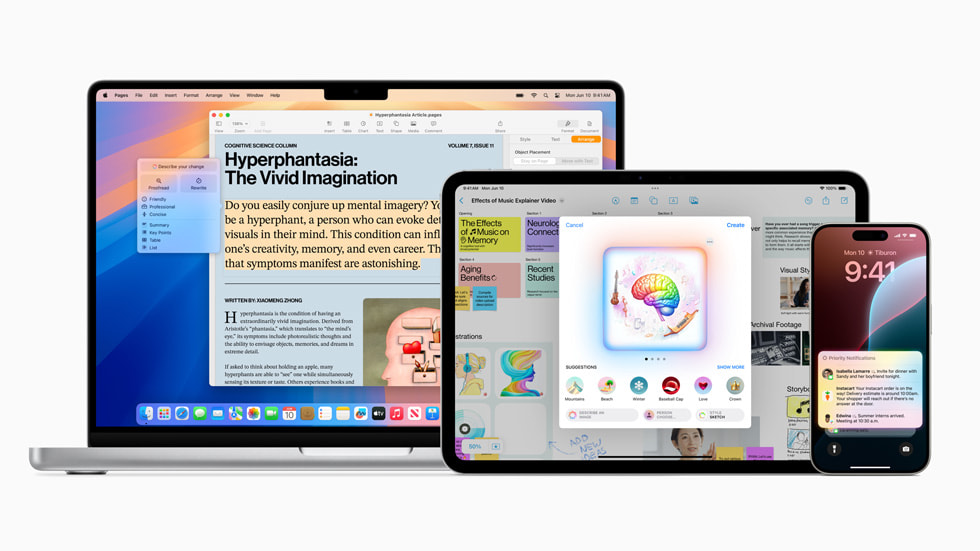
What Gemini-Powered Siri Can Actually Do
The technical improvements coming to Siri address the core complaints that have plagued Apple's assistant for years. The new capabilities fall into several categories:
On-Screen Awareness: This is the defining feature of the upgrade. Siri can now interpret the pixels on a user's display in real-time using the Neural Engine on Apple's latest silicon. A user can say "Send this to Sarah" while looking at a photo, PDF, or specific paragraph in an article, and Siri identifies the content and executes the share through the appropriate platform. This moves Siri from a command-response system to a context-aware collaborator.
Personal Context Understanding: The new Siri maintains knowledge of past conversations and can reference previous interactions. It also offers proactive suggestions based on information from apps like Calendar, anticipating user needs by analyzing data across applications.
Deeper In-App Controls: Voice commands become significantly more capable, enabling sequences like "Find photo of beach, edit it, save to Vacation folder." This level of multi-step task execution was previously impossible.
Expanded Task Assistance: New capabilities include booking travel, creating documents in the Notes app with structured information like recipes, and answering factual questions in a more conversational manner.
The Architecture Decision Apple Made
The partnership reveals a pragmatic assessment by Apple about the economics of frontier AI. Building competitive foundation models requires billions in training compute, access to massive datasets, and specialized talent that even Apple, with its $3 trillion market cap, found challenging to develop quickly enough.
Apple reportedly explored partnerships with both Anthropic and OpenAI before settling on Google. The negotiations with Anthropic stalled when the company demanded several billion dollars annually over multiple years. OpenAI presented different concerns, as the company was actively recruiting Apple talent and developing competing hardware.
Google offered the technical capability Apple needed while presenting fewer competitive threats. The deal is non-exclusive, allowing Apple to continue developing its own AI capabilities alongside the partnership. This hybrid approach, where Apple maintains control of on-device processing and Private Cloud Compute while leveraging Google's Gemini backbone, preserves Apple's privacy narrative while gaining access to frontier model performance.
For AI practitioners, this architecture decision is instructive. Even the largest technology companies are recognizing that building every AI layer internally is neither efficient nor necessary. The trend toward specialized providers for foundation models, inference infrastructure, and application layers will likely accelerate.
Hardware Requirements and Regional Implications
The advanced AI capabilities require significant processing power, limiting compatibility to iPhone 15 Pro, iPhone 16 series, and the upcoming iPhone 17 models. This constraint ensures consistent performance but creates a multi-year upgrade cycle before most users can access these features.
For the UAE and broader Middle East region, the rollout timeline matters. Apple's phased approach to AI feature availability has historically prioritized English-speaking markets first. The Arabic language support timeline for Gemini-powered Siri remains unclear, though Google's Gemini already supports Arabic better than most competitors.
The infrastructure partnership also has implications for data residency discussions happening across the Gulf region. Apple's emphasis on Private Cloud Compute suggests that sensitive processing remains under Apple's control, though the specific data flows between Apple and Google infrastructure warrant scrutiny for organizations with strict compliance requirements.
What This Means for the AI Assistant Market
The Gemini-powered Siri launch will intensify competition in the AI assistant space. Currently, ChatGPT leads with approximately 810 million monthly active users, followed closely by Google Gemini at 750 million. Apple's distribution advantage, with over 1 billion active iPhones worldwide, could rapidly shift these dynamics.
Several implications stand out for those building AI products:
Distribution trumps capability: Apple's partnership acknowledges that Google's models are competitive with anything Apple could build internally. The differentiator is Apple's ability to embed these capabilities into every iPhone interaction, from the lock screen to third-party apps.
Privacy as architecture, not marketing: Apple's hybrid approach, running simpler tasks on-device while routing complex queries through Private Cloud Compute, creates a genuine technical moat. Competitors cannot easily replicate this without controlling both the hardware and cloud infrastructure.
Multi-provider strategies become standard: Apple already partners with OpenAI for ChatGPT integration while now adding Google Gemini for core Siri functionality. This suggests that organizations should expect to work with multiple AI providers rather than standardizing on a single platform.
Looking Forward
The February demonstration will provide more clarity on specific capabilities and limitations. For now, the partnership signals that the AI assistant category is maturing from a pure technology race into an ecosystem competition. The winners will be those who can deliver AI capabilities through the interfaces users already trust and use daily.
For AI practitioners in the region, this development reinforces the importance of building applications that work across AI providers rather than betting on a single platform. The foundation model layer is commoditizing faster than many expected, and the differentiation is moving to distribution, integration, and user experience, areas where regional knowledge and relationships become competitive advantages.
Sources: