Something shifted in the AI industry this month. Anthropic, the company that was supposed to be the safety-focused underdog, has passed OpenAI in annualized recurring revenue. The numbers are striking: $30 billion ARR for Anthropic versus $25 billion for OpenAI. But the truly remarkable part is how they got there.
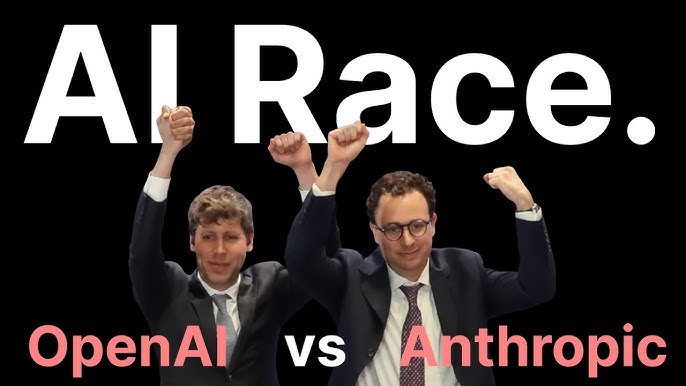
The Revenue Crossover
Anthropic's growth trajectory has been extraordinary. The company hit $1 billion ARR in January 2025. Fifteen months later, it reached $30 billion, representing 30x growth in just over a year. The most dramatic acceleration happened recently: the jump from $9 billion to $30 billion occurred in just four months.
What makes this milestone significant is not just the raw numbers but the composition. Anthropic derives roughly 80% of its revenue from enterprise customers, compared to OpenAI's more consumer-heavy mix. Over 1,000 companies now spend at least $1 million annually on Anthropic's services, a figure that doubled in under two months.
This is not a story about one company winning and another losing. OpenAI continues to dominate consumer AI and maintains a massive user base. But the enterprise revenue crossover signals that the market for business AI applications may be developing differently than many expected.
The Training Cost Differential
Here is where the story gets interesting for those of us who build AI systems. According to Wall Street Journal estimates, OpenAI's annual training costs will reach approximately $125 billion by 2030. Anthropic's projected costs for the same period: roughly $30 billion. That is more than a 4x difference.
This cost structure translates directly to different paths toward profitability. Anthropic projects positive free cash flow by 2027. OpenAI has delayed its breakeven target to 2030.
The implications are significant. Lower training costs mean more flexibility in pricing, more resources for product development, and ultimately more sustainable unit economics. For enterprise buyers evaluating AI vendors, these efficiency metrics matter as much as benchmark performance.
Why Enterprise Customers Are Moving
I have spoken with several technology leaders across the UAE and broader Middle East who have adopted Claude for enterprise workloads. The pattern I hear consistently involves three factors.
First, compliance and data privacy. Anthropic has invested heavily in enterprise-grade security features, data retention controls, and audit capabilities that map to regulatory requirements across different jurisdictions.
Second, integration with existing systems. Claude's API design and the Model Context Protocol (MCP) make it relatively straightforward to connect AI capabilities to legacy enterprise software, databases, and internal tools.
Third, consistency at scale. For production workloads that involve complex reasoning, code generation, or document analysis, Claude's reliability across varied inputs matters more than peak benchmark performance on standardized tests.
What This Means for AI Practitioners
For those of us building AI applications, several practical implications emerge from this competitive shift.
The multi-model approach is now standard. Data from Ramp shows that approximately 79% of OpenAI users also pay for Anthropic services. Enterprises are not choosing one provider; they are deploying both for different use cases. Your architecture should support swapping models based on task requirements.
Training efficiency matters. Anthropic's cost advantage comes from fundamental choices about model architecture and training methodology, not just operational efficiency. If you are fine-tuning or training custom models, examine your compute utilization carefully. The gap between efficient and inefficient approaches can be measured in billions of dollars at scale.
Enterprise features drive adoption. The models that win in business deployments are not always the ones with the highest benchmark scores. Integration capabilities, compliance features, and reliability under production conditions often matter more.
Looking Ahead
Anthropic's revenue milestone marks a significant shift in the AI industry's competitive landscape. But this is not the end state. Both companies are preparing for IPOs, likely within the next year. OpenAI continues to lead in research output and consumer adoption. Chinese AI labs are advancing rapidly with dramatically lower costs.
What we are witnessing is the maturation of AI from a research curiosity into a mainstream enterprise technology category. In that transition, business fundamentals like unit economics, enterprise sales capabilities, and sustainable cost structures become increasingly important.
For AI practitioners, the message is clear: build for the enterprise buyer. The consumer AI market captured headlines for the past three years, but the enterprise market is where the sustained revenue growth is happening. The companies that understand this distinction are the ones posting $30 billion revenue figures.