The cybersecurity timeline just shifted dramatically. New research from Caltech and quantum computing startup Oratomic demonstrates that AI tools can accelerate quantum computing breakthroughs in ways that were unimaginable just two years ago. The result: encryption-breaking quantum computers may arrive by 2029, not 2035.
What the Research Shows
The breakthrough centers on a deceptively simple question: how many physical qubits do you actually need to build a useful quantum computer? Previous estimates suggested millions. The new research, led by Oratomic CEO Dolev Bluvstein and a team of 14 researchers from Caltech, Berkeley, Harvard, Amazon, and Google, says the answer is closer to 10,000.
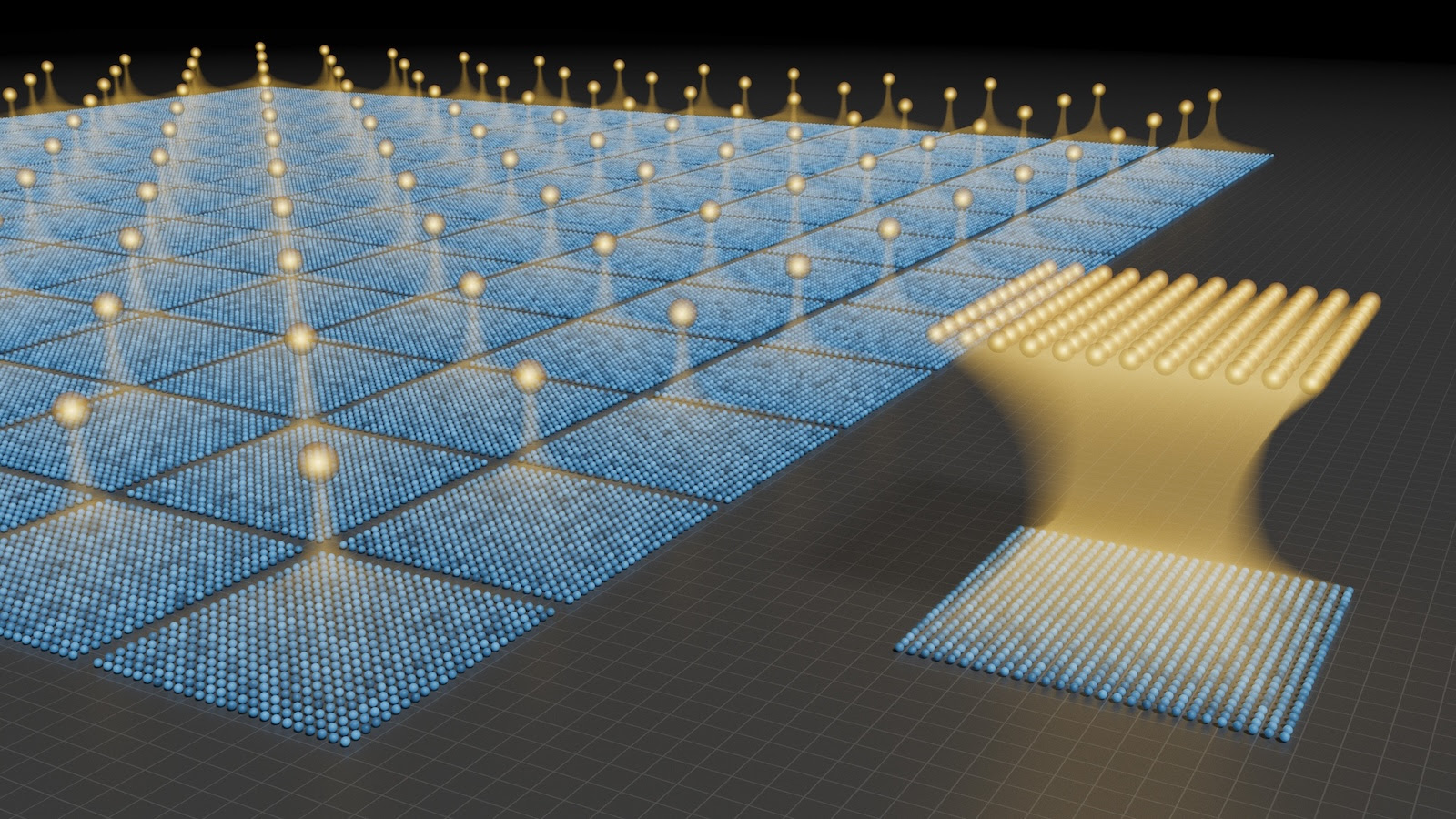
The key insight involves neutral atom quantum computers, which use optical tweezers to trap and manipulate individual atoms. Unlike superconducting qubits that require complex wiring, neutral atoms can be shuttled across the entire array and directly entangled with distant atoms. This flexibility enables dramatically more efficient error correction.
"Unlike other quantum computing platforms, neutral atom qubits can be directly connected over large distances," explains Manuel Endres, a Caltech physicist who recently demonstrated the largest qubit array ever assembled with 6,100 trapped atoms. "Optical tweezers can shuttle one atom to the other end of the array and directly entangle it with another atom."
How AI Made the Difference
Here is where the story gets interesting for AI practitioners. The researchers used OpenEvolve, an open-source tool that harnesses large language models including Google's Gemini and Anthropic's Claude, to optimize their quantum algorithms. The process resembles natural selection: the AI generates variations, evaluates their performance, and iteratively improves.
The initial algorithm performance was, according to one researcher, "about 1,000 times worse" before AI intervention. After optimization, the team achieved a 100-fold reduction in the number of atoms needed to encode a single qubit, from hundreds down to just three.
Dolev Bluvstein was direct about AI's contribution: "There is no question that we used AI to accelerate this development."
This represents a new paradigm for scientific discovery. AI is not just analyzing data or making predictions. It is actively participating in the research process, exploring solution spaces that human researchers might never consider. For those of us working in AI, this collaboration between machine learning and fundamental physics research is precisely the kind of cross-domain application that makes this field so compelling.
The Security Implications
The practical consequence is sobering. Shor's algorithm, the quantum approach that can break RSA and elliptic curve cryptography, can now theoretically be executed at a cryptographically relevant scale using just 10,000 reconfigurable atomic qubits with encoding rates approaching 30%. This is a tenfold improvement over earlier projections that suggested millions of qubits were necessary.
Google has responded by accelerating its deadline for post-quantum cryptography preparation from 2035 to 2029. Cloudflare has matched that timeline. A 2025 survey found a 39% probability that encryption-breaking quantum computers will emerge within the next decade.
For organizations in the UAE and Middle East, where digital transformation is accelerating rapidly across government and enterprise, this timeline shift demands immediate attention. The data you encrypt today could be stored by adversaries and decrypted retroactively once quantum computers mature. This "harvest now, decrypt later" threat makes the transition to post-quantum cryptography genuinely urgent.
What Practitioners Should Do Now
The technical community has been working on post-quantum cryptography standards for years. NIST finalized its first set of quantum-resistant algorithms in 2024, and implementations are now available in major cryptographic libraries. The challenge is deployment at scale.
For AI practitioners specifically, I see three immediate priorities. First, inventory your cryptographic dependencies. Most AI systems rely on TLS for API communication, encrypted storage for model weights and training data, and digital signatures for model provenance. Each of these may need migration.
Second, begin testing post-quantum alternatives in non-production environments. The performance characteristics differ from classical cryptography, and understanding the tradeoffs early prevents surprises during mandatory migration.
Third, consider the AI security angle. As this research demonstrates, AI can dramatically accelerate quantum computing progress. The same tools that enabled this breakthrough could accelerate others. Building security practices that assume continued rapid progress is prudent.
Looking Forward
What strikes me most about this research is the feedback loop between AI and quantum computing. AI accelerated this quantum breakthrough. Quantum computers, once mature, will likely accelerate AI training and inference. We are watching two transformative technologies amplify each other's development.
Oratomic, founded by pioneers of fault-tolerant quantum computing, is now targeting a fault-tolerant quantum computer by decade's end. Whether they achieve it or not, the research methodology they demonstrated (using AI to optimize quantum algorithms) will certainly spread. This is how scientific progress accelerates.
For those of us in the AI field, the lesson is clear: our tools are becoming essential infrastructure for breakthroughs far beyond traditional machine learning applications. That is both an opportunity and a responsibility.